Register Now
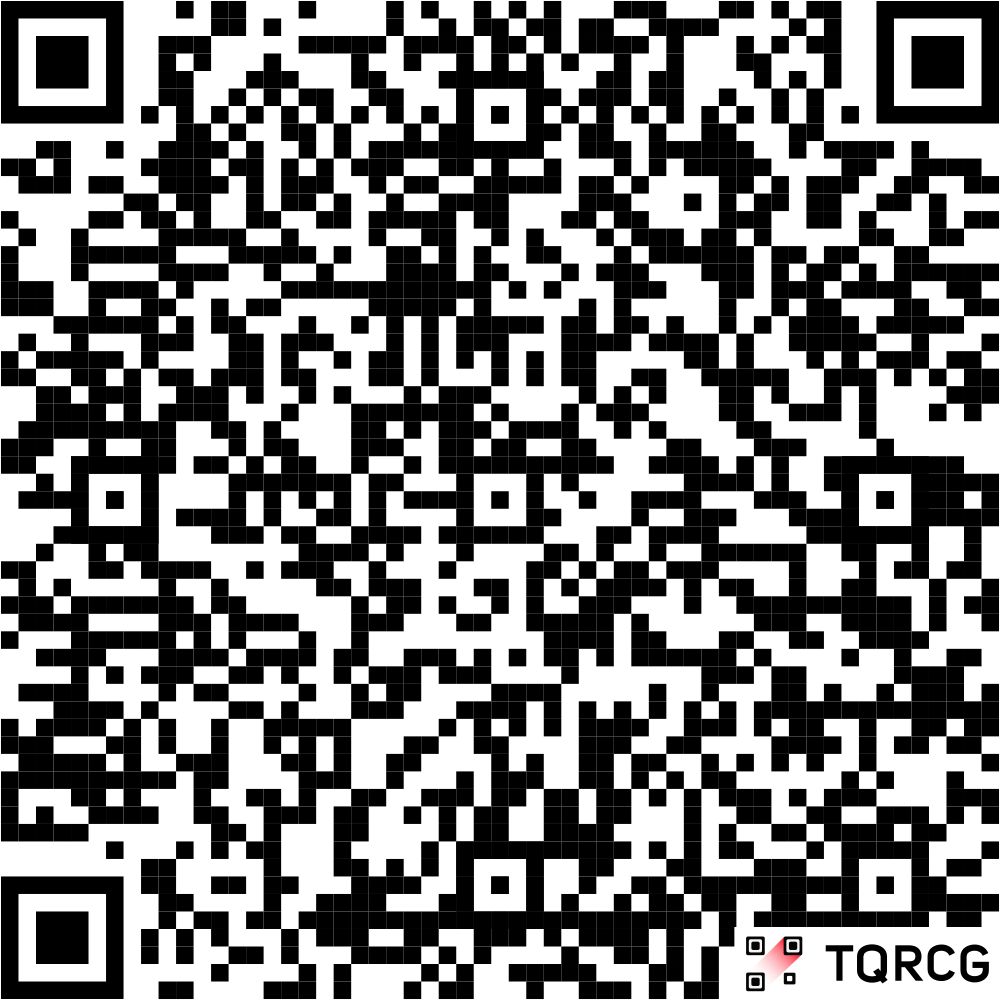
Scan to register
QUANTATHON
7-9 FEBRUARY 2025
TP-1 TURING HALL (8TH FLOOR)
Why Participate?
Learn from Experts
Hands-on mentorship from quantum computing professionals
Network
Connect with like-minded quantum enthusiasts and industry leaders
Innovation
Work on cutting-edge quantum computing challenges
Prizes & Perks
Win exciting prizes and exclusive swag from sponsors
Learn Together
Collaborative learning through peer discussions, guided sessions, and shared problem-solving
About Quantathon
The SRM Quantum Computing Club is a dynamic student organization at SRM University, united by a passion for quantum computing. Through engaging workshops and interactive sessions, we explore quantum mechanics, algorithms, and practical applications. Hands-on learning with cutting-edge platforms like Qiskit and Cirq enhances our problem-solving skills and understanding. Guest lectures and industry interactions keep us updated with the latest advancements. Our inclusive environment welcomes students from all disciplines, fostering lasting friendships and professional connections.
Competition Tracks
Quantum Intelligence
(Quantum ML)
Fuse quantum computing with machine learning to design next-generation intelligent systems. Explore quantum neural networks, variational quantum algorithms, and hybrid quantum-classical models that push the limits of AI performance, optimization, and data representation.
Quantum Communication
& Cryptography
Engineer the future of secure communication using quantum principles. Explore quantum key distribution (QKD), entanglement-based protocols, and post-quantum security models to design robust, tamper-resistant communication systems for real-world deployment.
Quantum Optimization
& Error Mitigation
Focus on making quantum algorithms practical and scalable on noisy intermediate-scale quantum (NISQ) devices. Explore quantum optimization algorithms (VQE, QAOA), noise modeling, error mitigation techniques, and hardware-aware circuit optimization to improve performance under real-world constraints.
Prizes
Winner
₹15,000
Runner Up
₹10,000
Second Runner Up
₹5,000
Industrial Problems
(RECOMMENDED)
Quantum Correlations & QKD Security
Design and simulate a framework to quantify and preserve quantum correlations in two-qubit, multi-qubit, or qubit–qudit systems subjected to amplitude damping and other typical noise channels. Simulate a prepare-and-measure QKD protocol and analyse how channel noise and losses affect key generation rate and security.
Quantum Approximate Optimization for Graph Partitioning
Apply QAOA to solve graph partitioning problems, exploring its effectiveness in dividing networks into balanced subsets while minimizing edge cuts.
Hybrid Quantum-Classical Neural Network for Image Recognition
Develop a hybrid quantum-classical framework that combines quantum computing with classical neural networks to enhance image recognition capabilities.
Traveling Salesman Problem with QAOA
Implement QAOA to optimize solutions for the classic traveling salesman problem, demonstrating quantum advantage in combinatorial optimization.
QGNN-based Manufacturing Optimization
Develop a QGNN-based hybrid quantum–classical framework for optimizing job scheduling and production routing in manufacturing systems under multiple operational constraints.
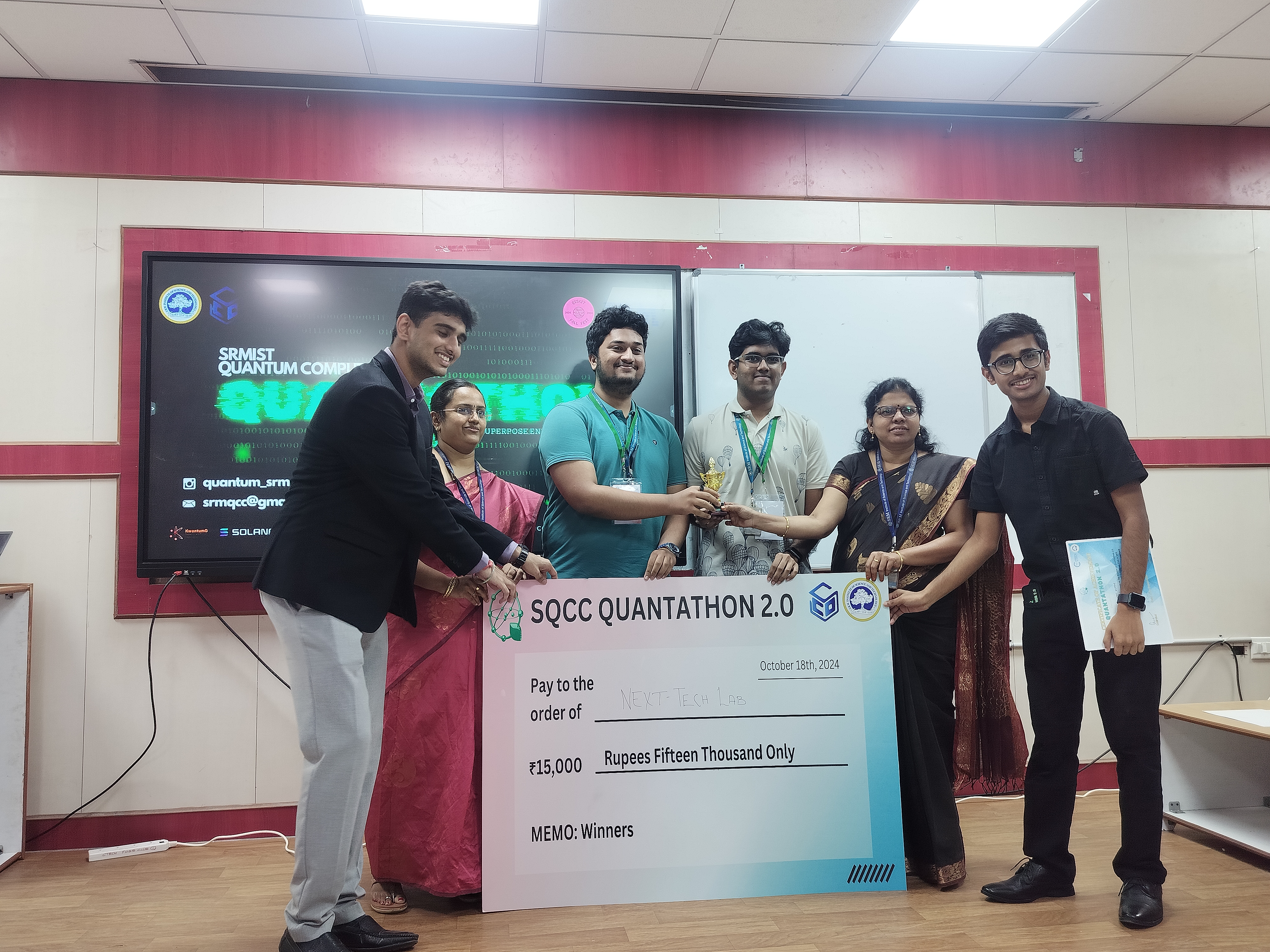
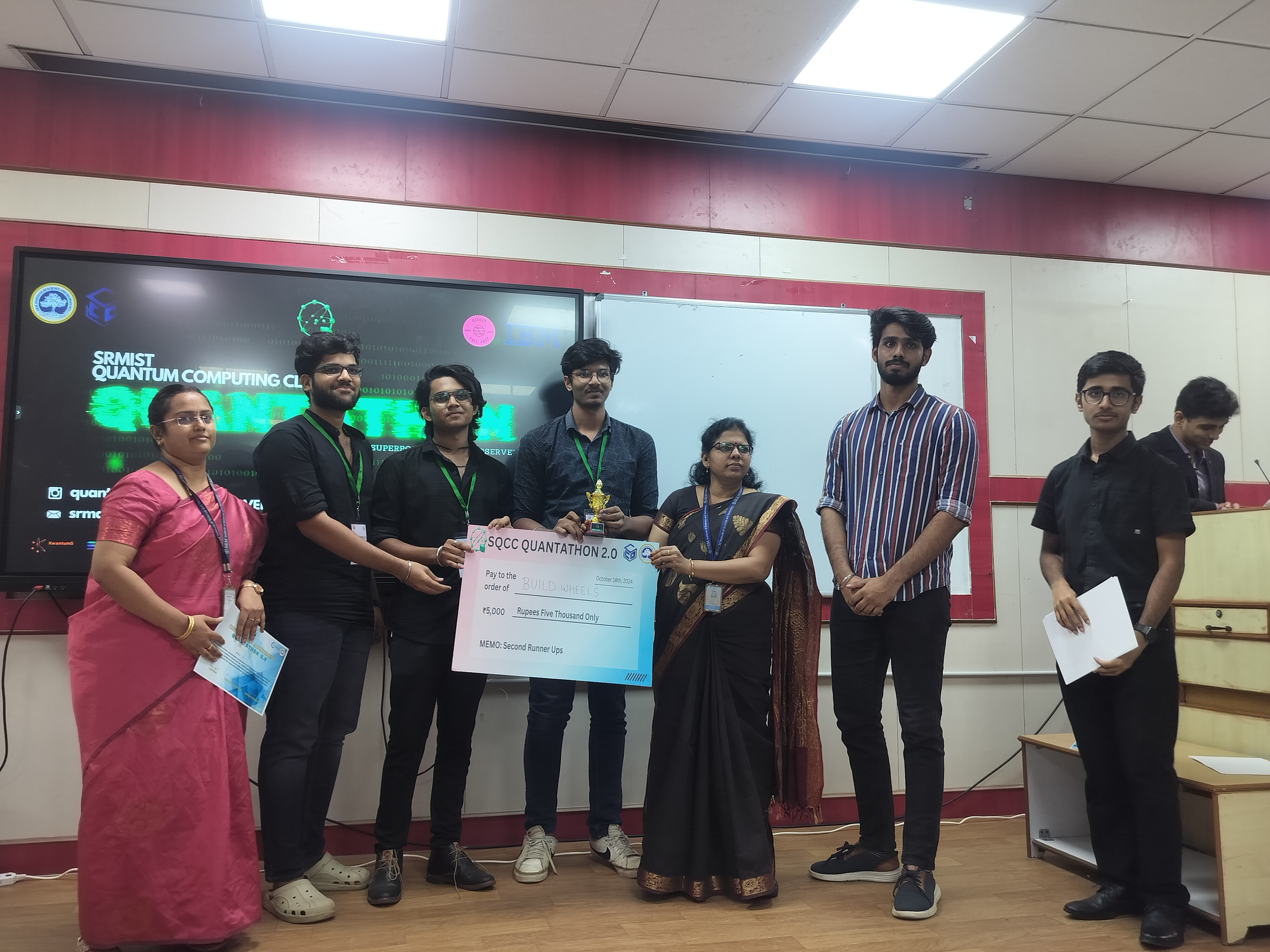
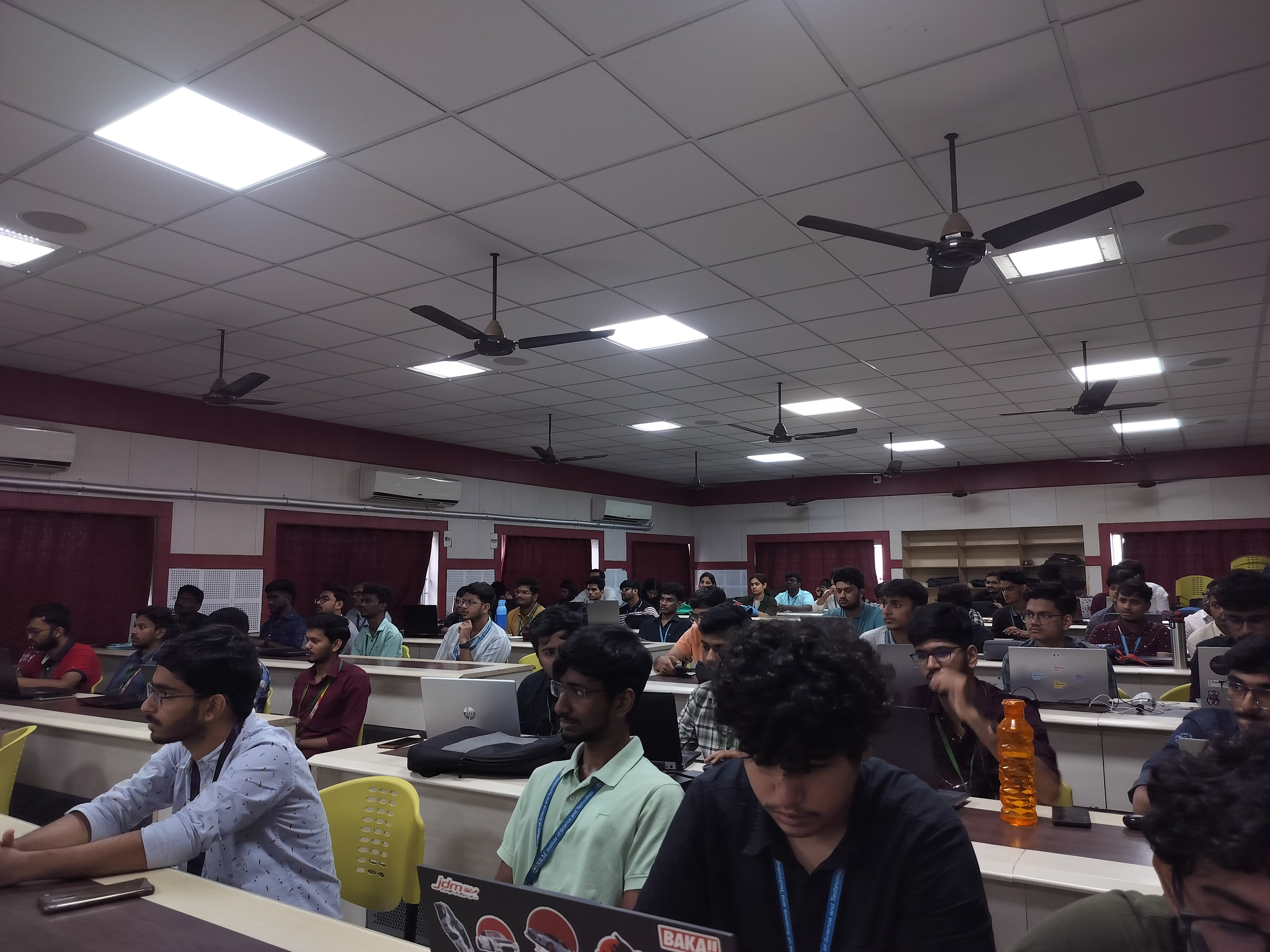
Event Gallery
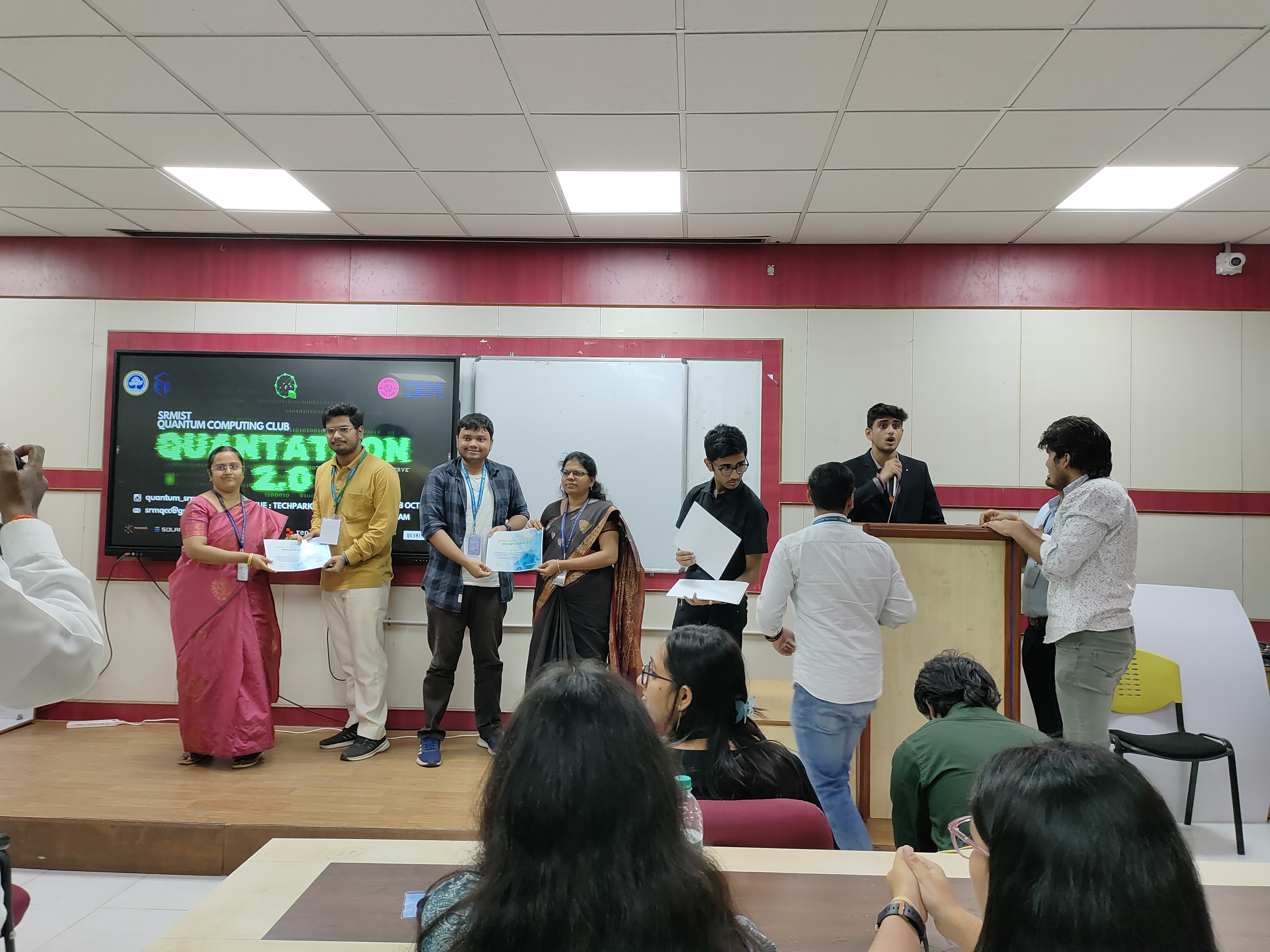
1/5
Judging Criteria
Innovation
30%Originality and creativity of the solution
Technical Implementation
30%Quality of code and quantum algorithms used
Impact
25%Real-world applicability and potential impact
Presentation
15%Clarity and effectiveness of project demonstration